
The team behind CyanLines, Manchester’s ambitious city-centre walking scheme, recently shared two significant updates about the project with its partners and stakeholders.
One was the news that a major grant from the Bupa Foundation’s Healthy Cities initiative had been awarded to the National Trust to help enable Phase Two of the Castlefield Viaduct development.
Another was an announcement regarding a new CyanLines route – to be called CL5 – which will improve the walking and wheeling experience when travelling to the Etihad Stadium, and Co-op Live Arena, from the centre of Manchester.
Commenting on the new CL5 route, Mayor of Greater Manchester, and co-chair of CyanLines, Bev Craig, said: “The ambition of CyanLines to join up our green spaces, rivers and canals is a key part of our vision to create a greener, healthier and better-connected city region.
“The new route between Piccadilly and the Etihad Campus is a really exciting next step. By making it easier to walk and wheel, removing barriers and bringing more trees, wildlife and welcoming public spaces along the way, CyanLines is turning that vision into reality.”
Commenting on the funding to help further extend the Castlefield Viaduct site, Hilary McGrady, Director-General of the National Trust, said: “Initiatives like Castlefield Viaduct, CyanLines and Bupa Healthy Cities demonstrate what’s possible when we work together and will have a transformative effect on the nature network and communities in Manchester. But more than that, it shows what can be done in cities right across the nation to help people and nature thrive.”
Both announcements were made at a major CyanLines event – hosted at the Aviva Studios complex – which was attended by representatives of the GM Ringway Association, including the GM Ringway’s founder, Dr Andrew Read (pictured below).
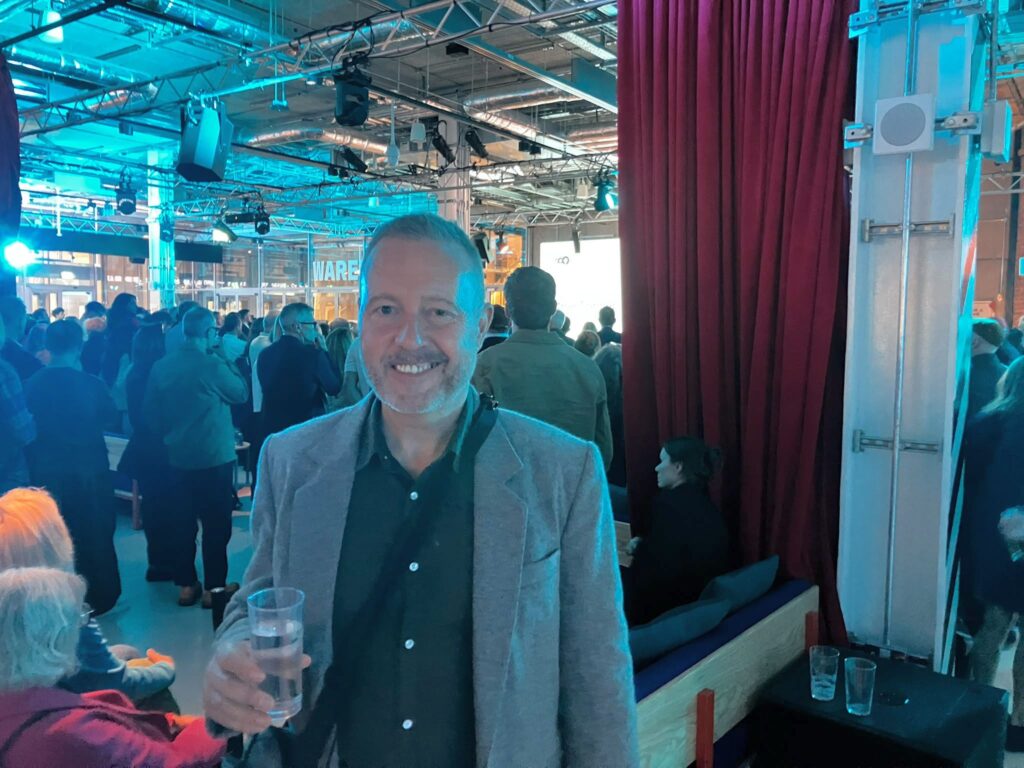
Also in attendance was Trafford Council leader, Tom Ross, who told the Manchester Evening News that he hoped the CyanLines network would eventually link up with the GM Ringway trail – which he himself has completed – helping to ensure all of Greater Manchester’s boroughs were connected to the city centre via accessible walking and wheeling routes.
That idea is also aligned to CyanLines long-term vision to develop a network of hundreds of miles of CyanLines routes over ten years, starting with the city centres of Manchester and Salford, and then stretching out across Greater Manchester.
You can more about both recent CyanLines announcements here.

Project partners